
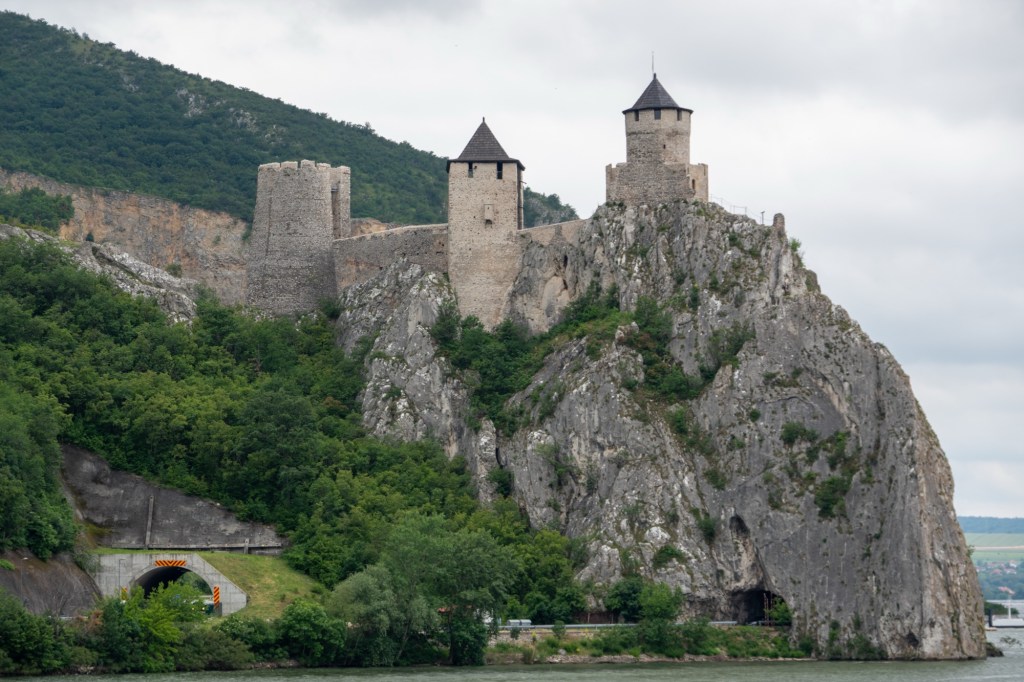
Our view from this mornings mooring was outstanding, Golubac Fortress standing guard at the entrance to Djerdap gorge.

With Prehistoric origins the fortress was first mentioned in 1335. Called Cuppae during Roman times the existing structure would have been recognisable by the 16th and 17th centuries.
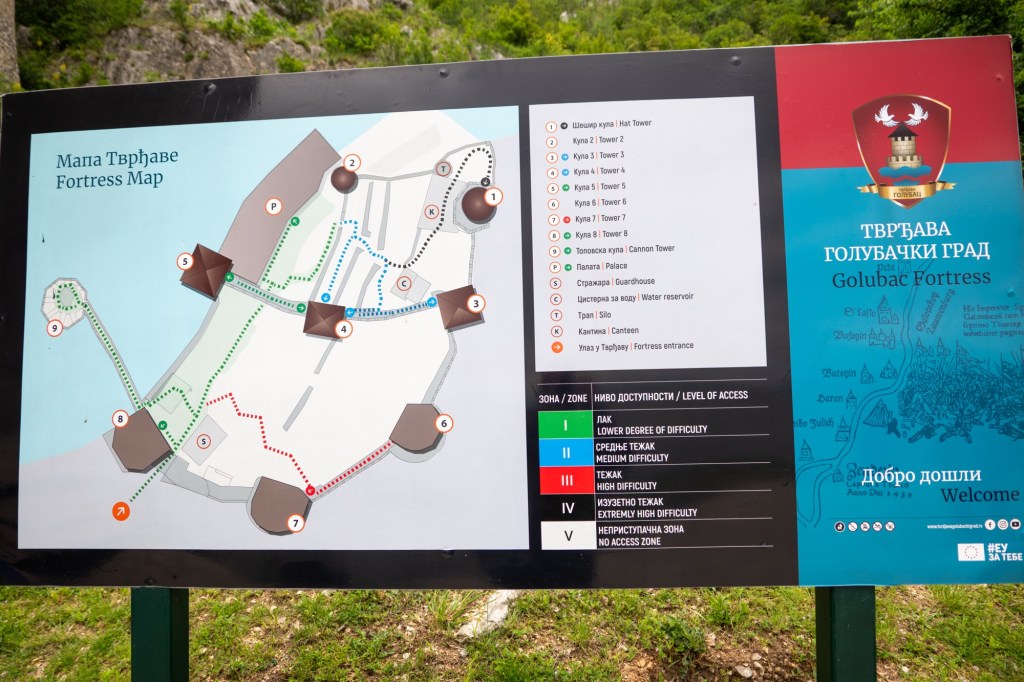
With a series of towers, curtain walls and traps it was never taken in a siege, of which there were numerous, usually between the Ottoman Empire and a Christian coalition led by Hungary.
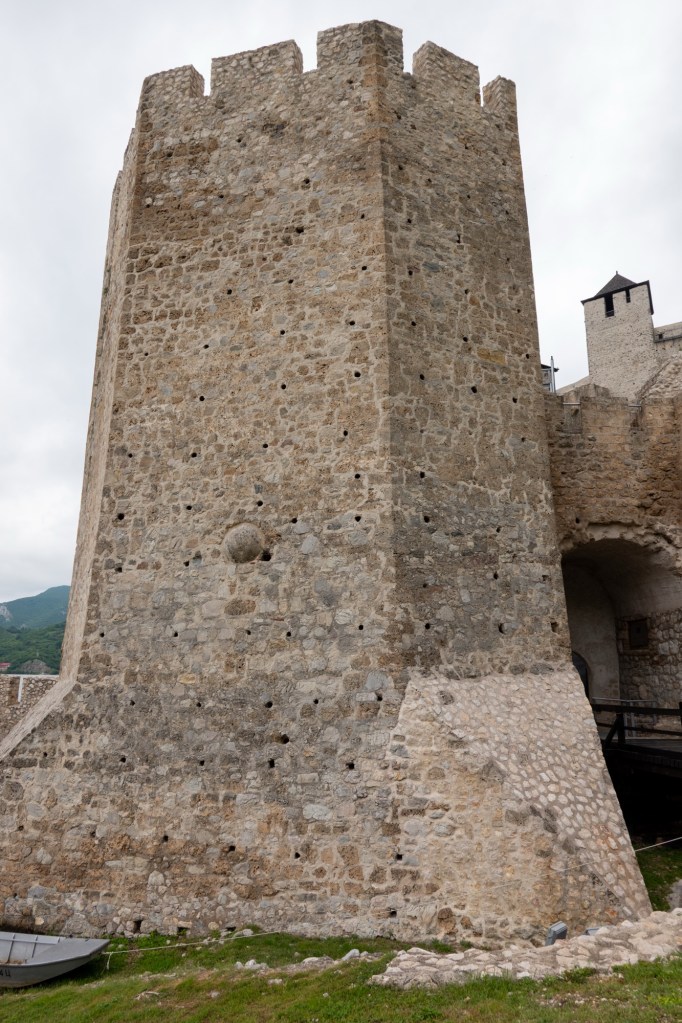
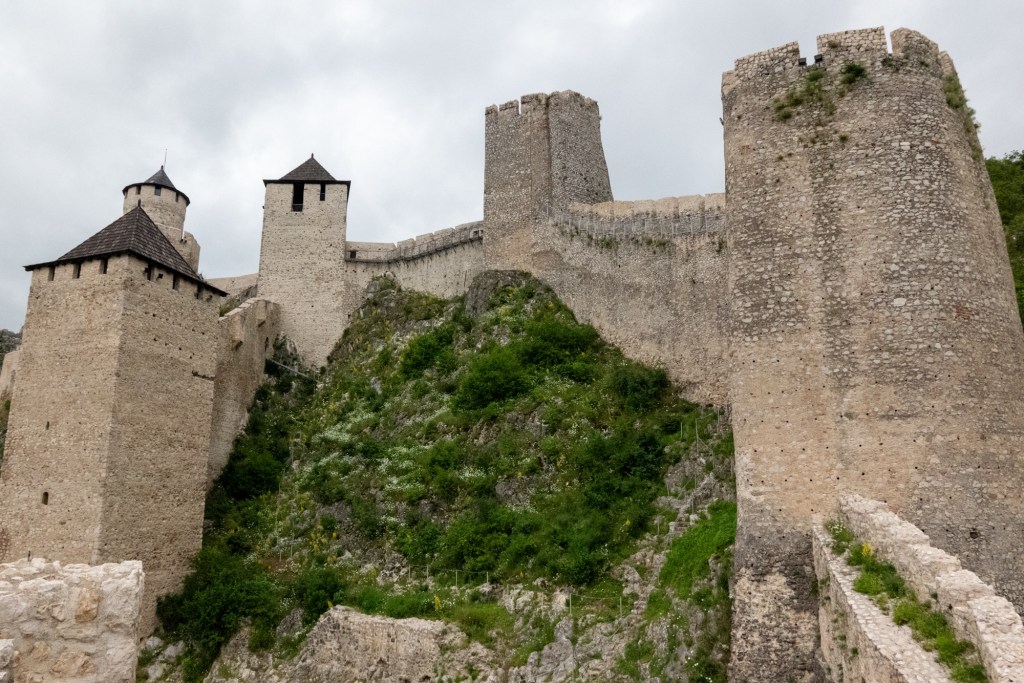
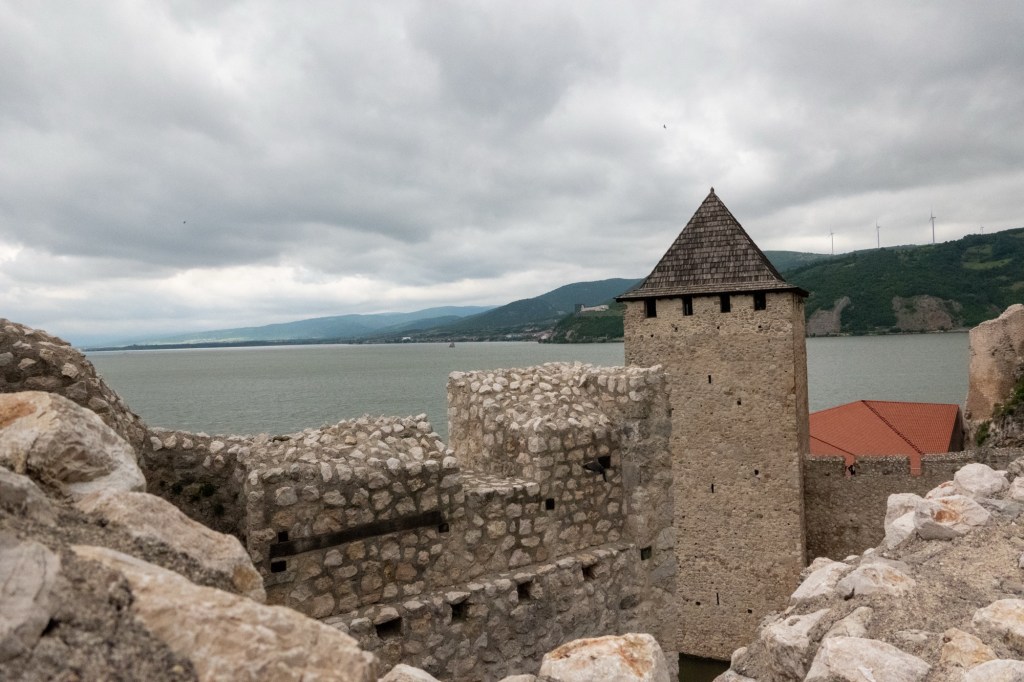
Once over the drawbridge, thru the gate and over the murder pits there was no obvious gate…..instead there’s a steep climb up to a concealed entrance, and then another 7 more gates before gaining access to the palace. No wonder it was never taken ! Even with modern stairs it was a slog to get from tower to tower.
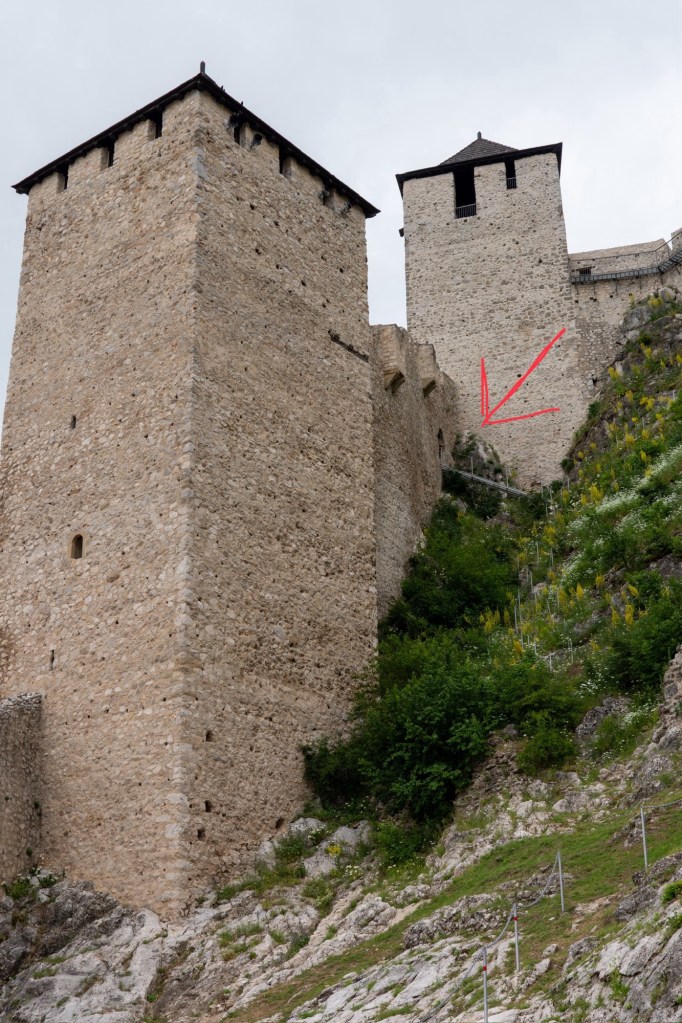

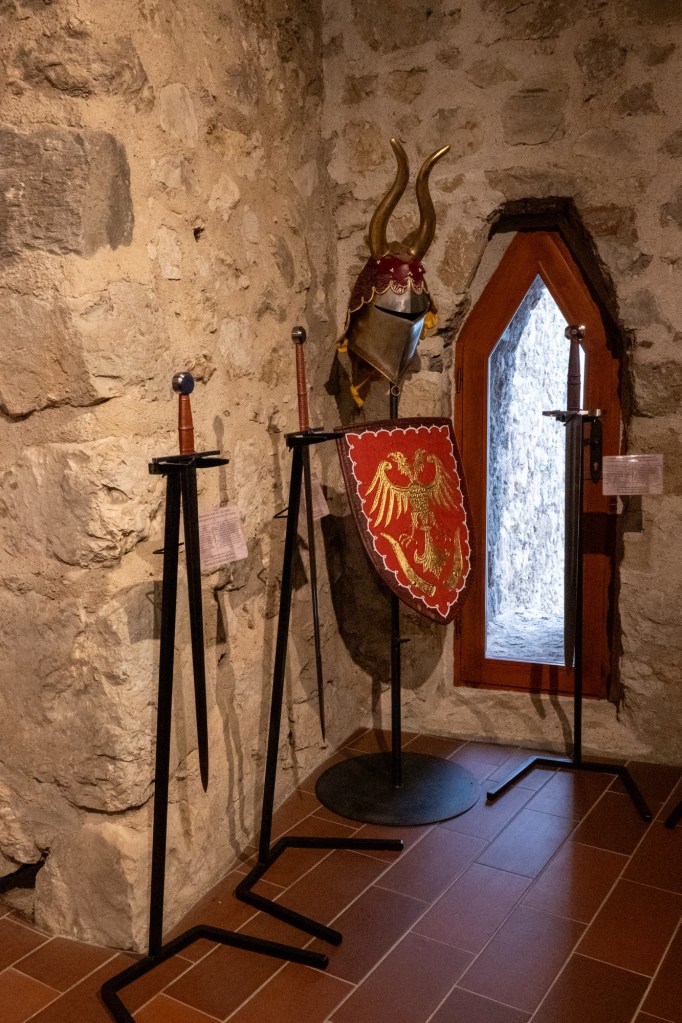
Taking a few modern short cuts the palace interior held numerous reconstructions of weapons and armour. It also had some original Brigandine armour which had been put back together… a rare example of plate armour, beautifully decorated.
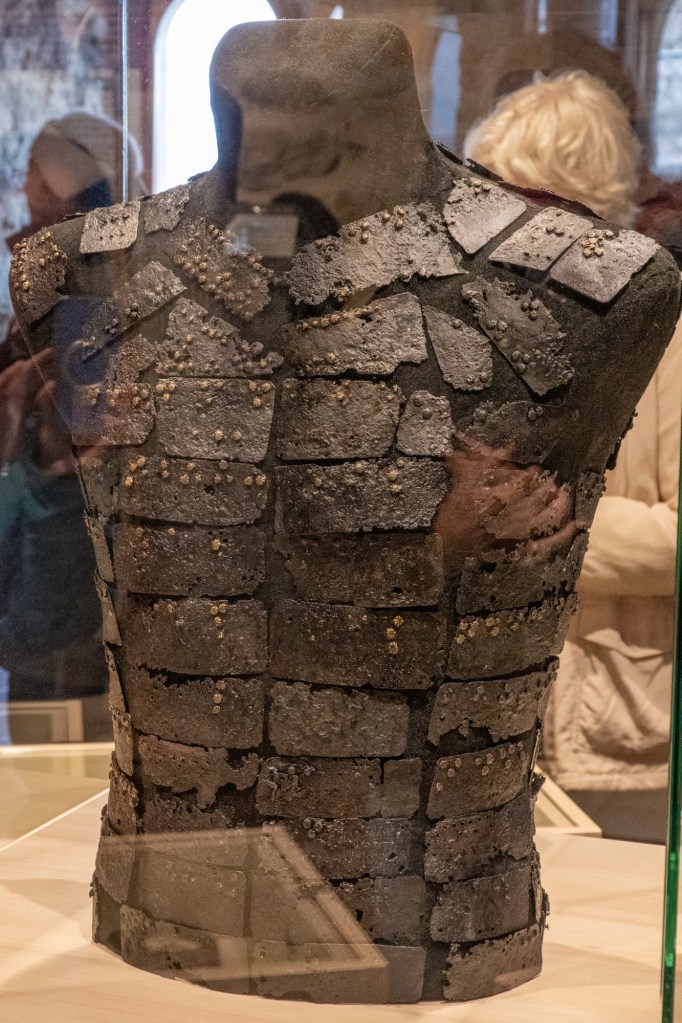
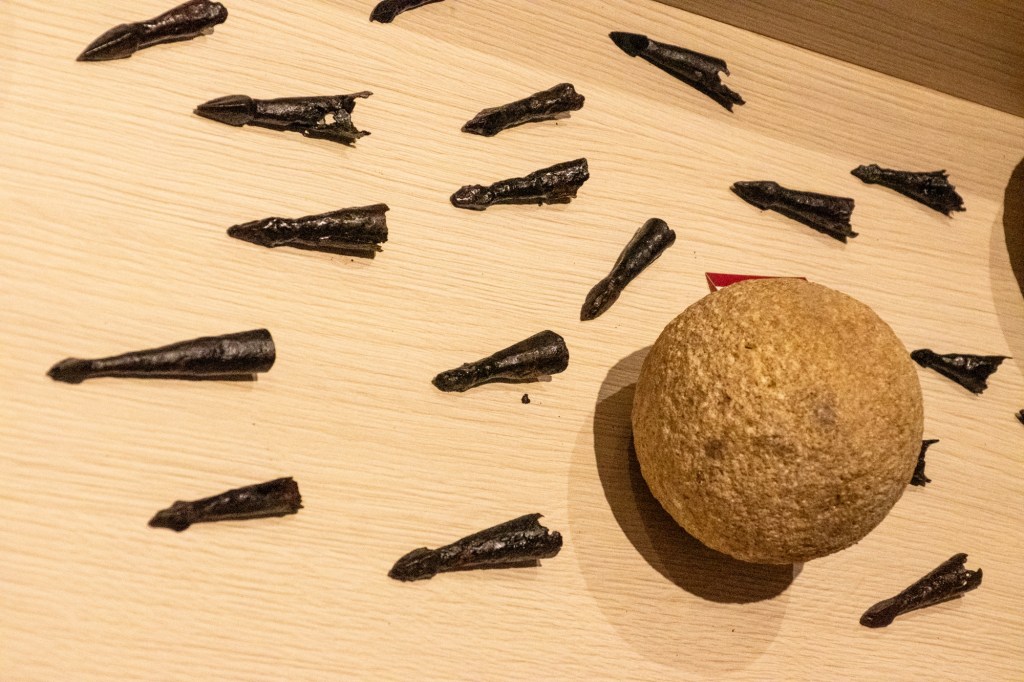
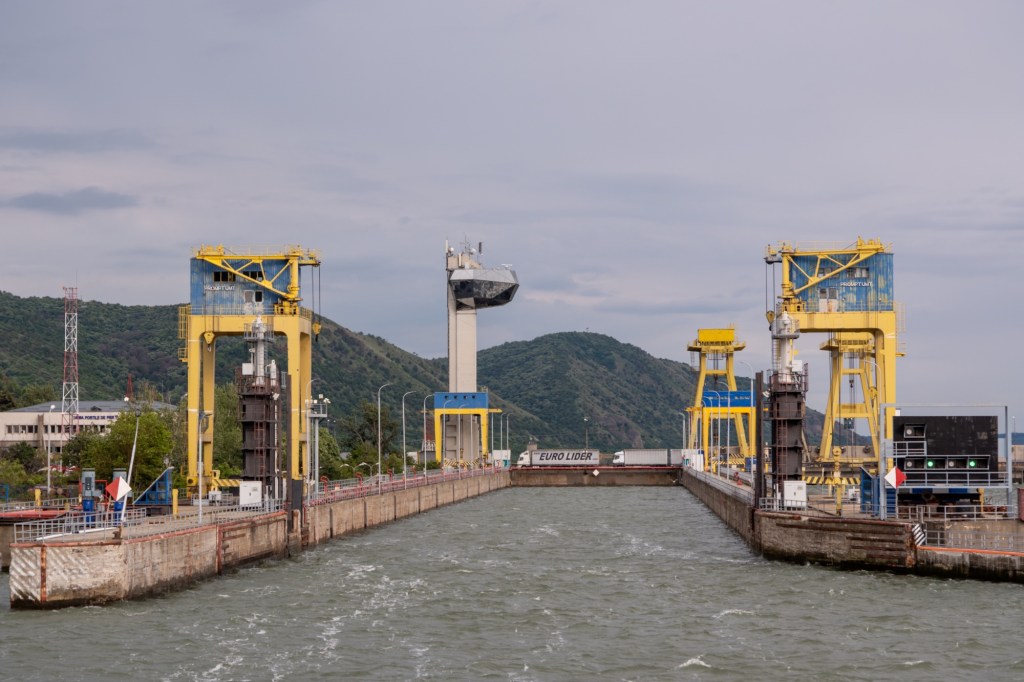
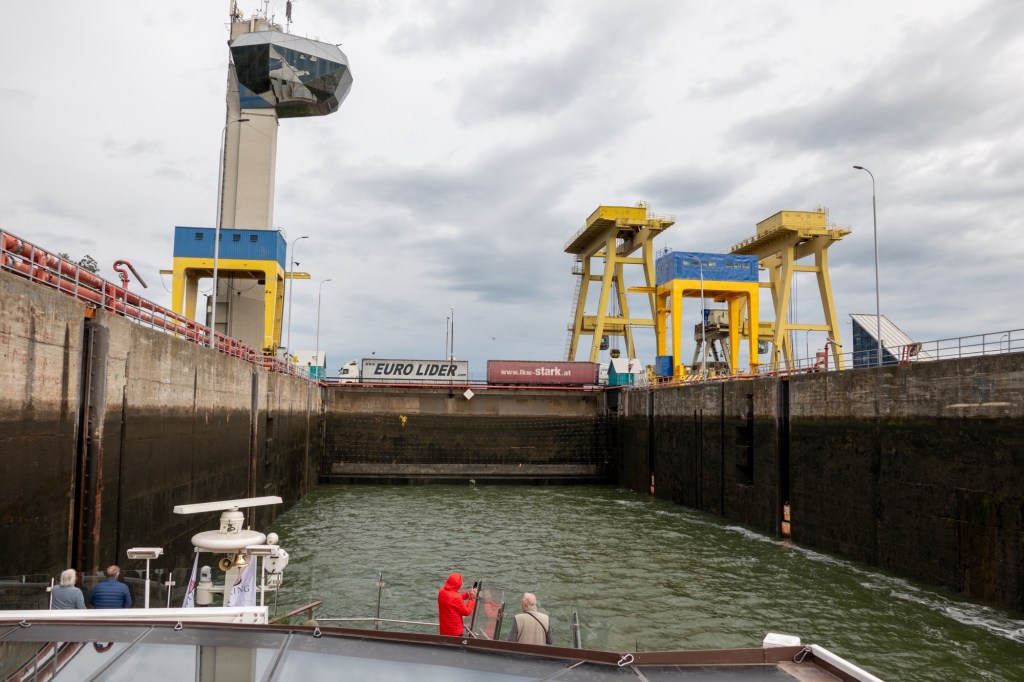
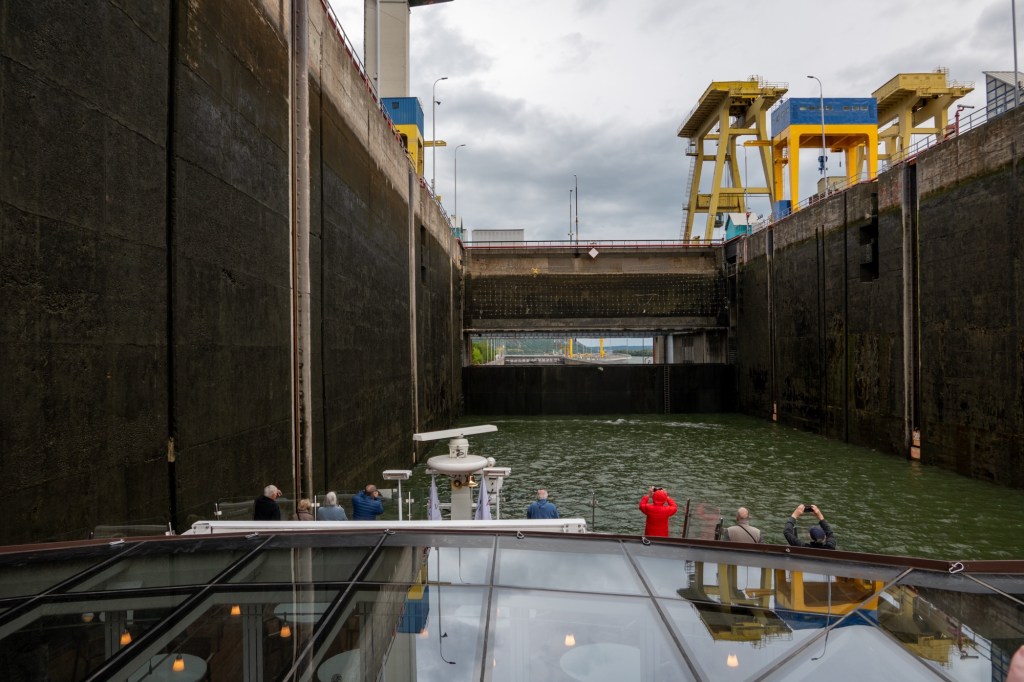
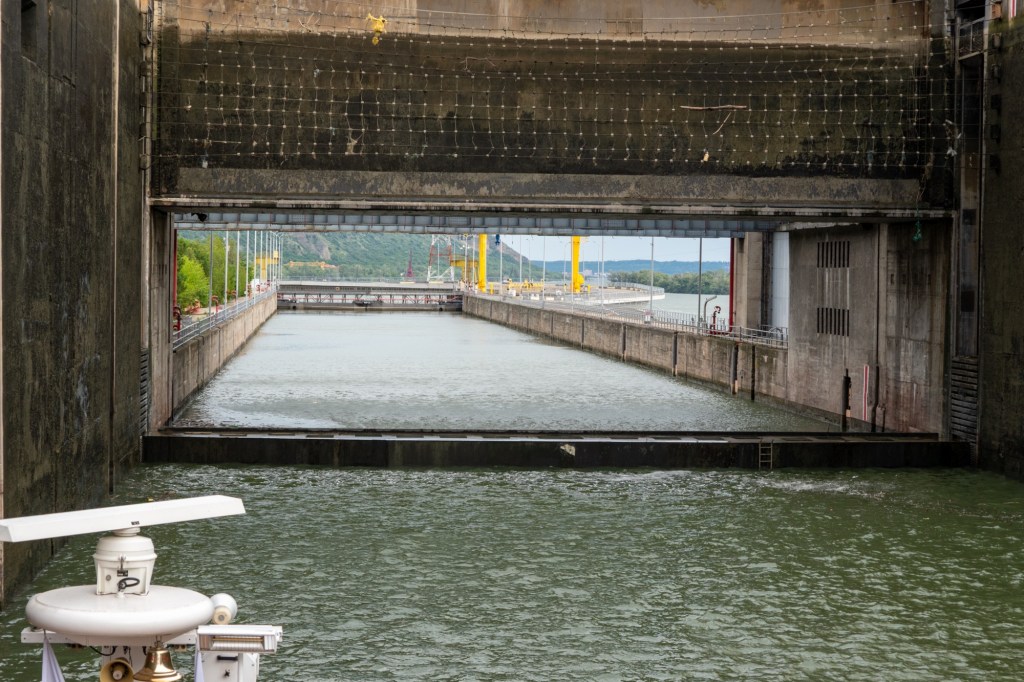
Going thru 3 of the 8 towers the size and complexity of the fortress was grasped…..it’s a very impressive piece of preserved and reconstructed Serbian history, and only completed recently due to the construction of the Iron Gate dam. This has significantly increased the water level of the Danube and means we have to go through some deep locks this afternoon.

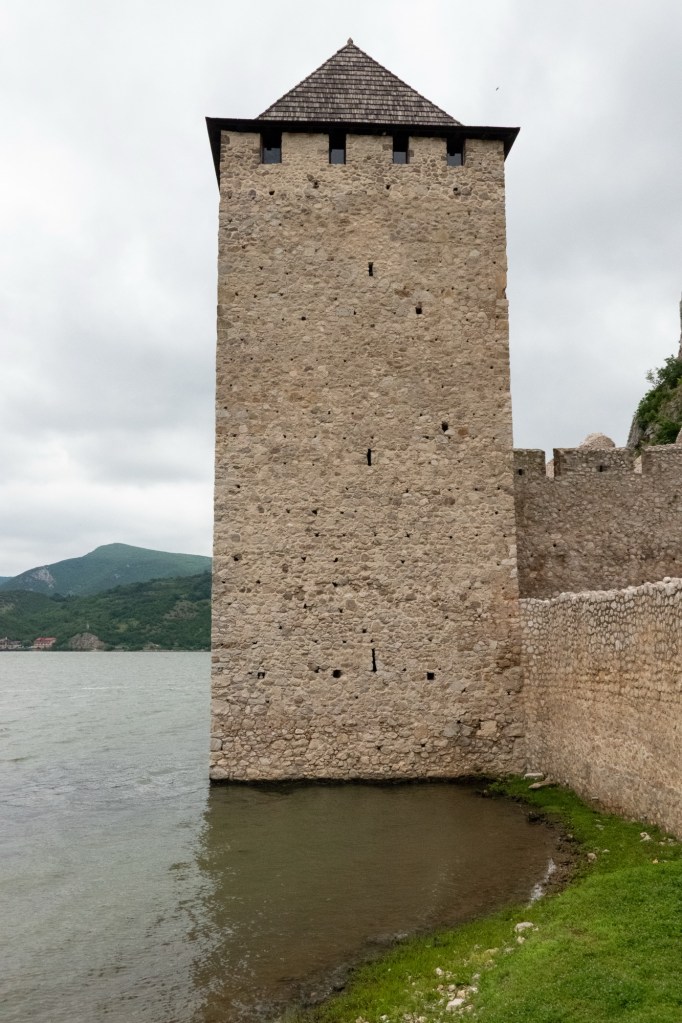



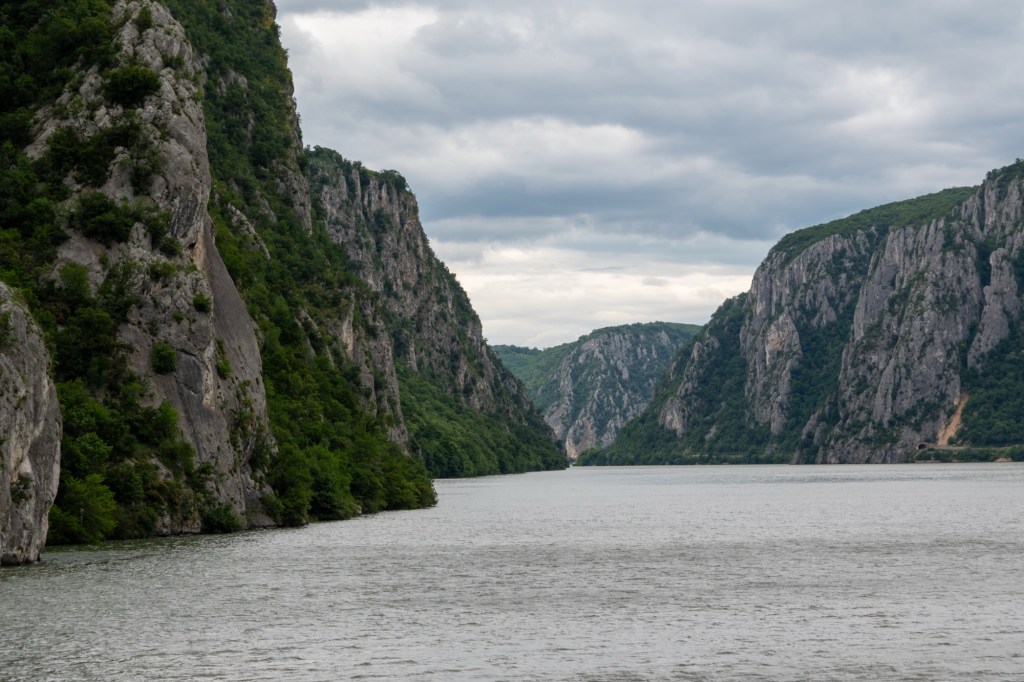
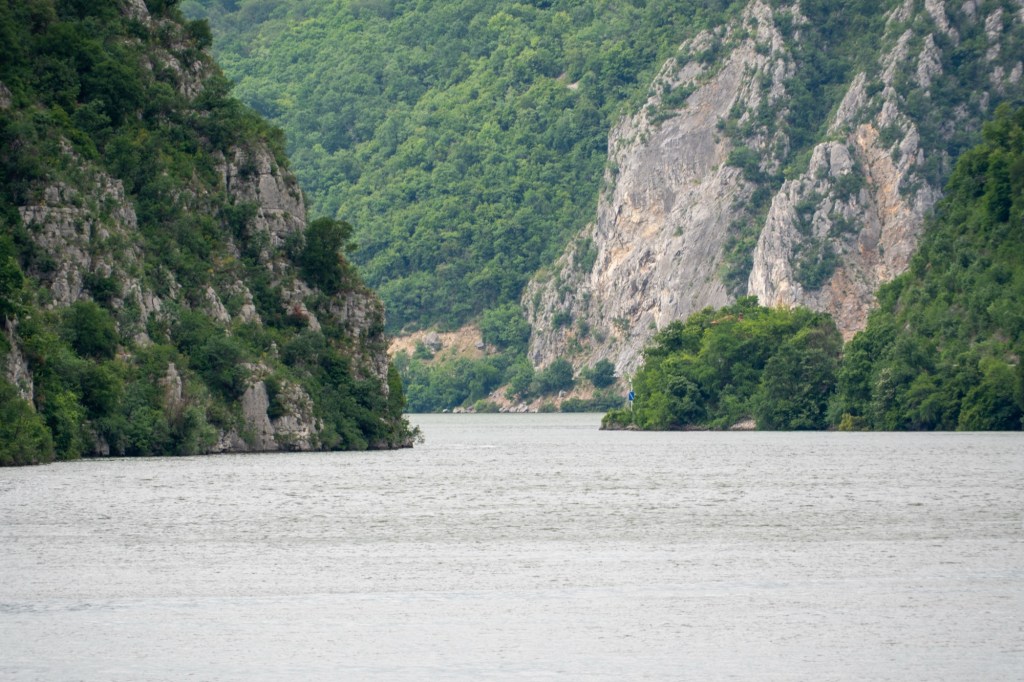
The Iron Gate is a series of spectacular narrow gorges slicing through the Carpathian and Balkan mountains. This was enhanced by the building of the Iron Gate Dam, flooding the area up to an additional 30 metres, and unfortunately destroying numerous villages, archeological sites and stopping sturgeon migration. Even on a grey day it was impressive, albeit a bit cold.
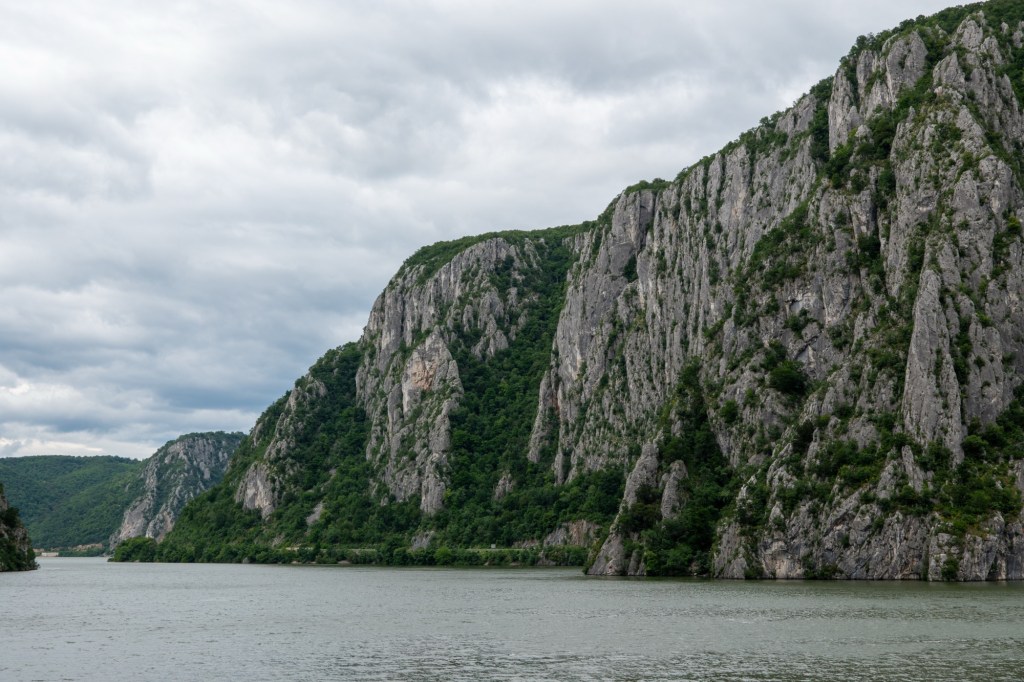
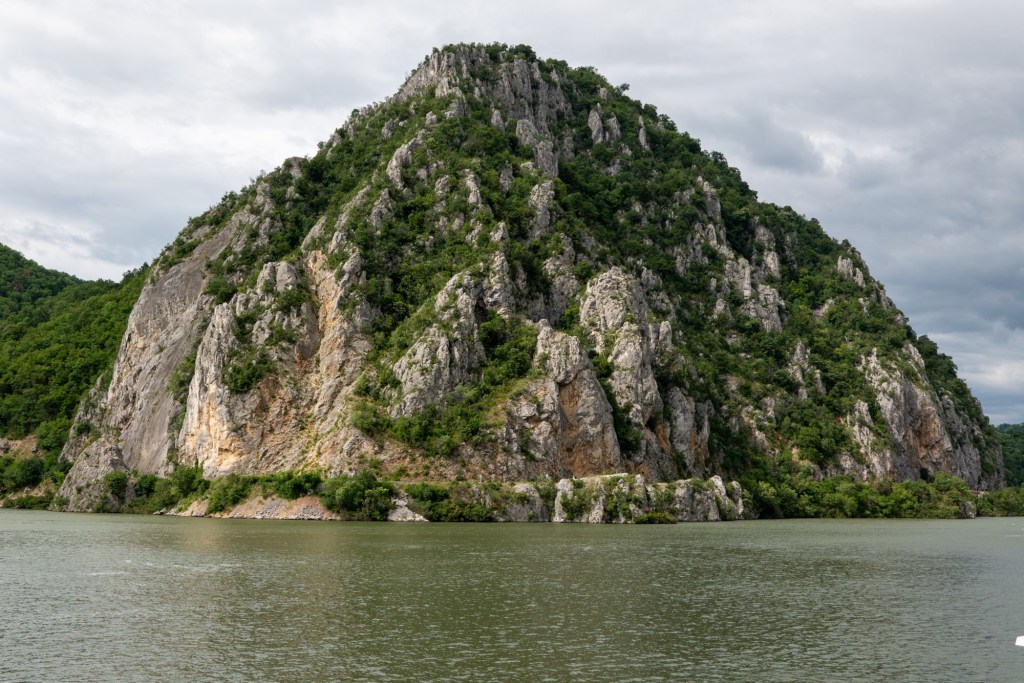


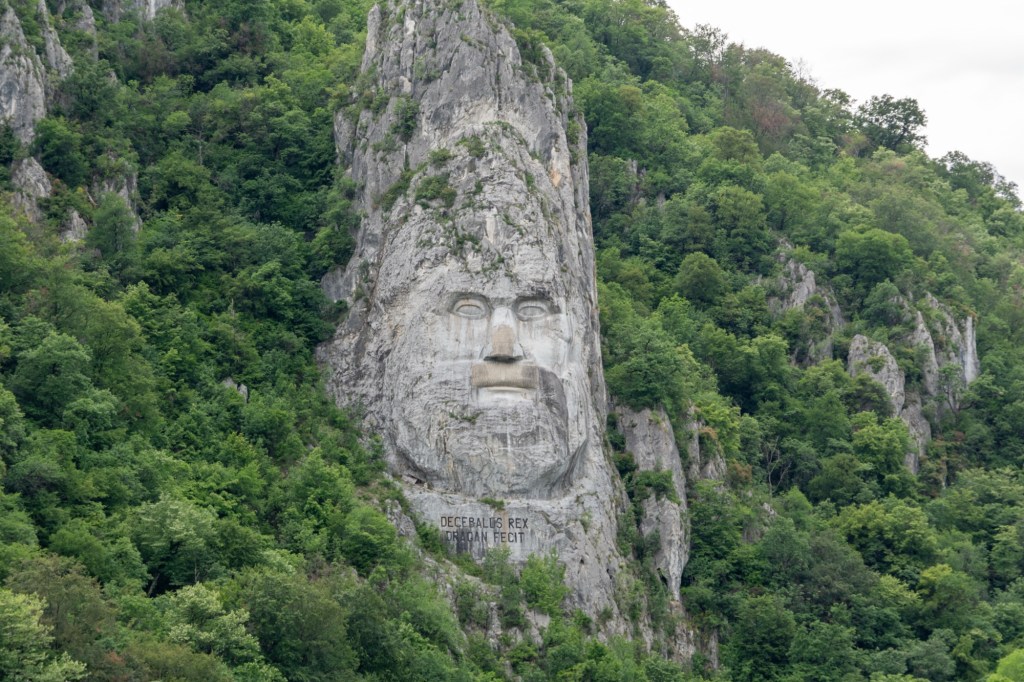
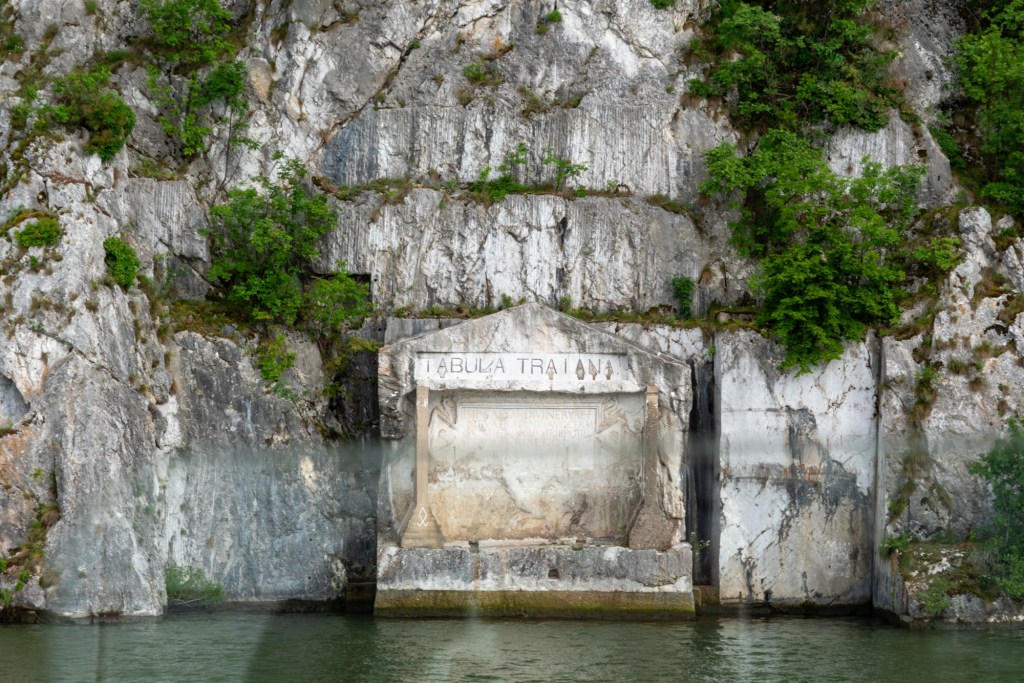
After exiting the gorges we entered the first of the 2 staircase Iron Gate locks. The first one had vertical gates, 2nd ended with more traditional side ones.


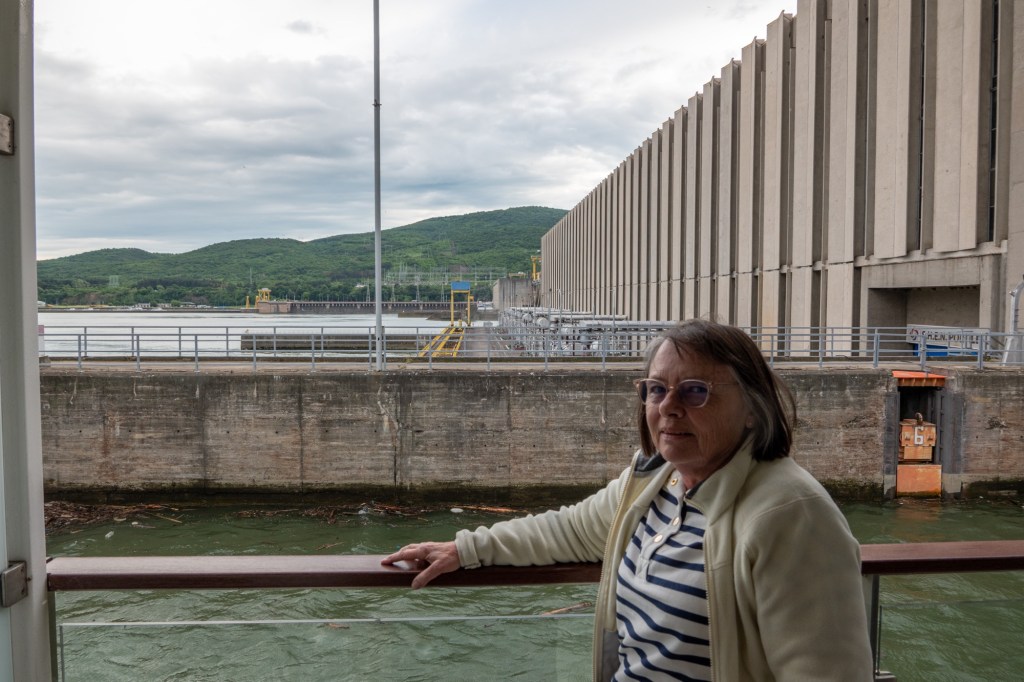
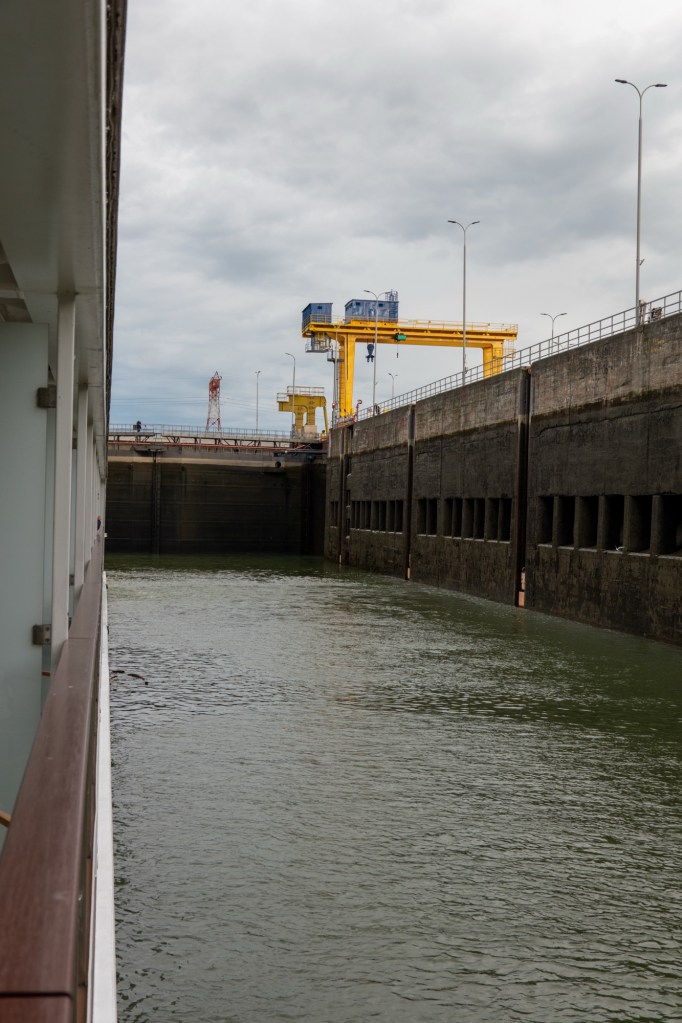
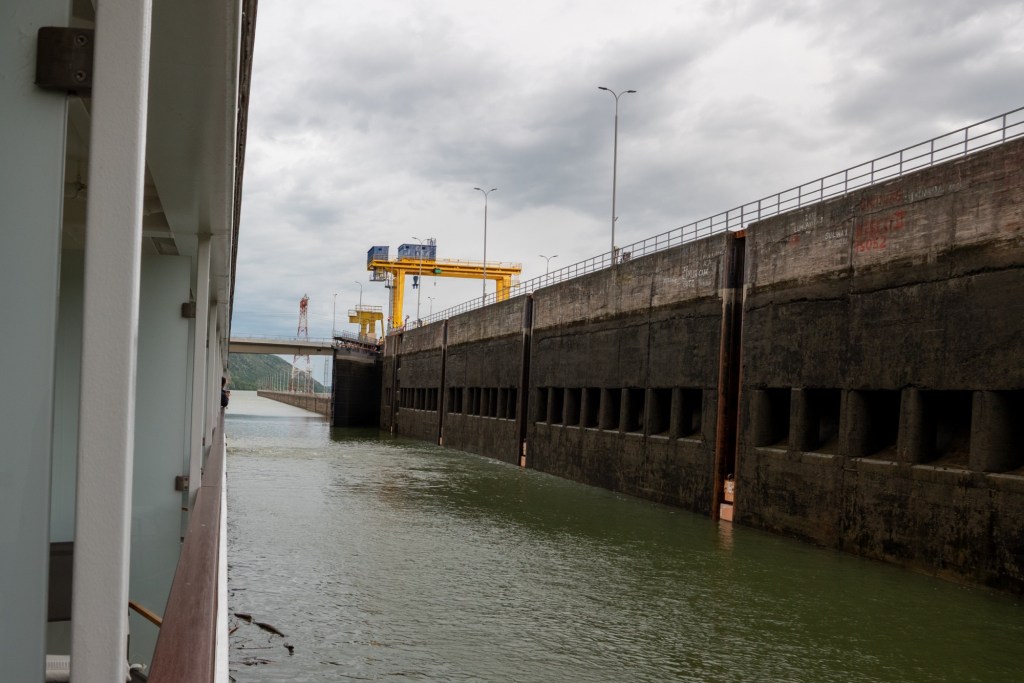
Welcome to Romania!
 Tasotter
Wow. Th
LikeLike